Northern Utah
Pet-friendly artificial turf and dog runs
Drainage-first turf systems built for dogs — no mud, no dead patches, and a drainage layer designed to be rinsed.
Every job, every time.
Dog owners are the easiest turf customers to make happy, because the thing they are replacing — a muddy, patchy, urine-burned lawn — is genuinely bad. But pet turf is only as good as its drainage and its infill. Get those wrong and you have traded mud for odor.
- Demo of existing lawn or failed pet area
- Deeper, more open base built for flow-through rather than just support
- Perforated pet-rated turf backing with high flow rates
- Antimicrobial or zeolite-based infill instead of plain silica sand
- Perimeter secured tightly so dogs cannot get an edge up
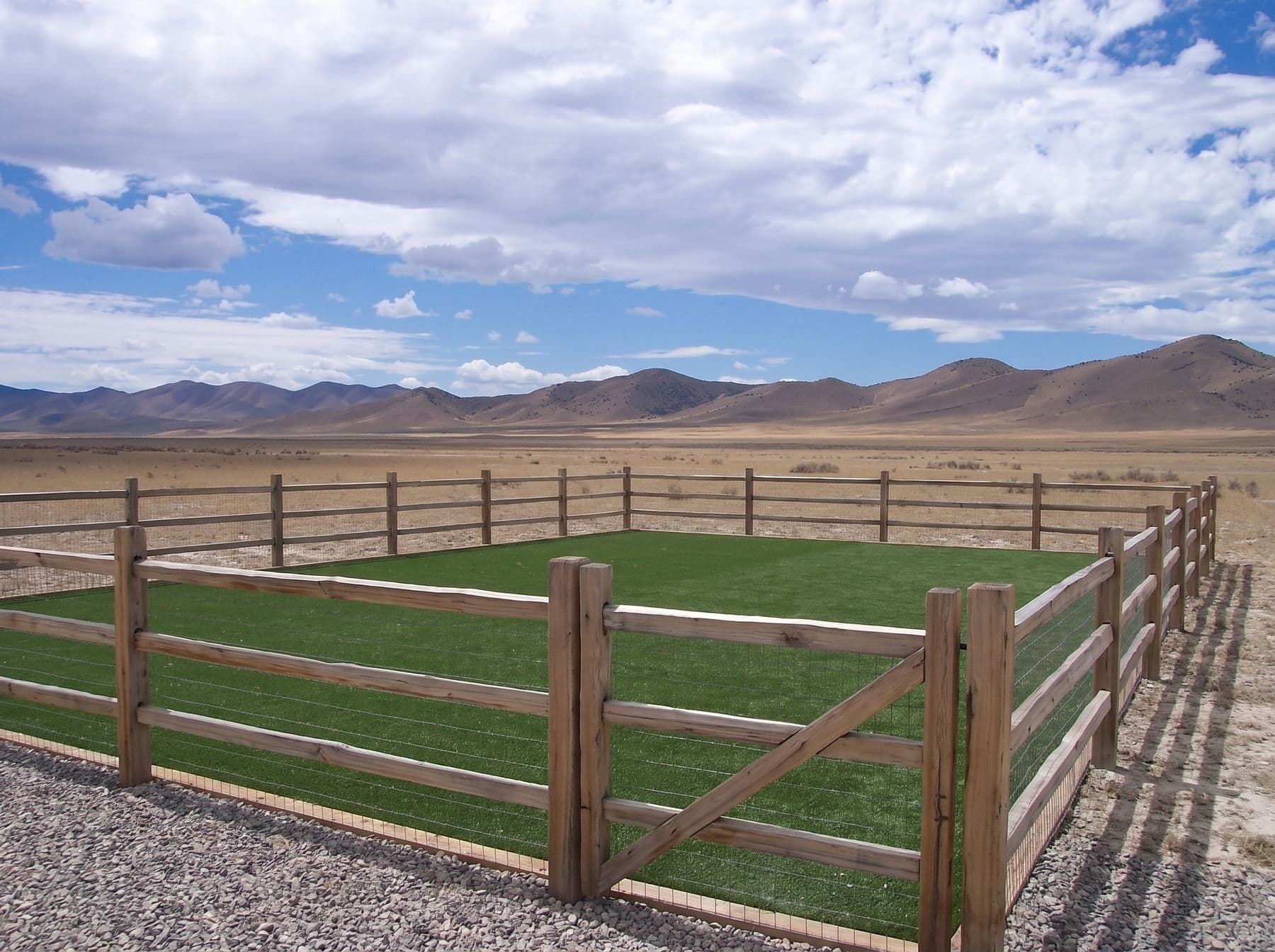
- Optional dedicated dog-run zone with a drain line
- Rinse-down and maintenance walkthrough
What changes because this is Utah
These are the things that decide whether the yard holds up. Ask any bid you get about them.
Odor is a drainage problem, not a turf problem
Urine that drains through and gets rinsed away does not smell. Urine sitting in a saturated base does. On heavy clay yards with multiple dogs we build a more open base and, where it makes sense, add a drain line so there is somewhere for it to go.
Infill choice matters more here than anywhere else
Plain silica sand holds ammonia. Zeolite-based and antimicrobial infills bind and neutralize it. It is a modest cost difference at install and the single biggest factor in whether the yard smells in August.
Dogs dig at edges
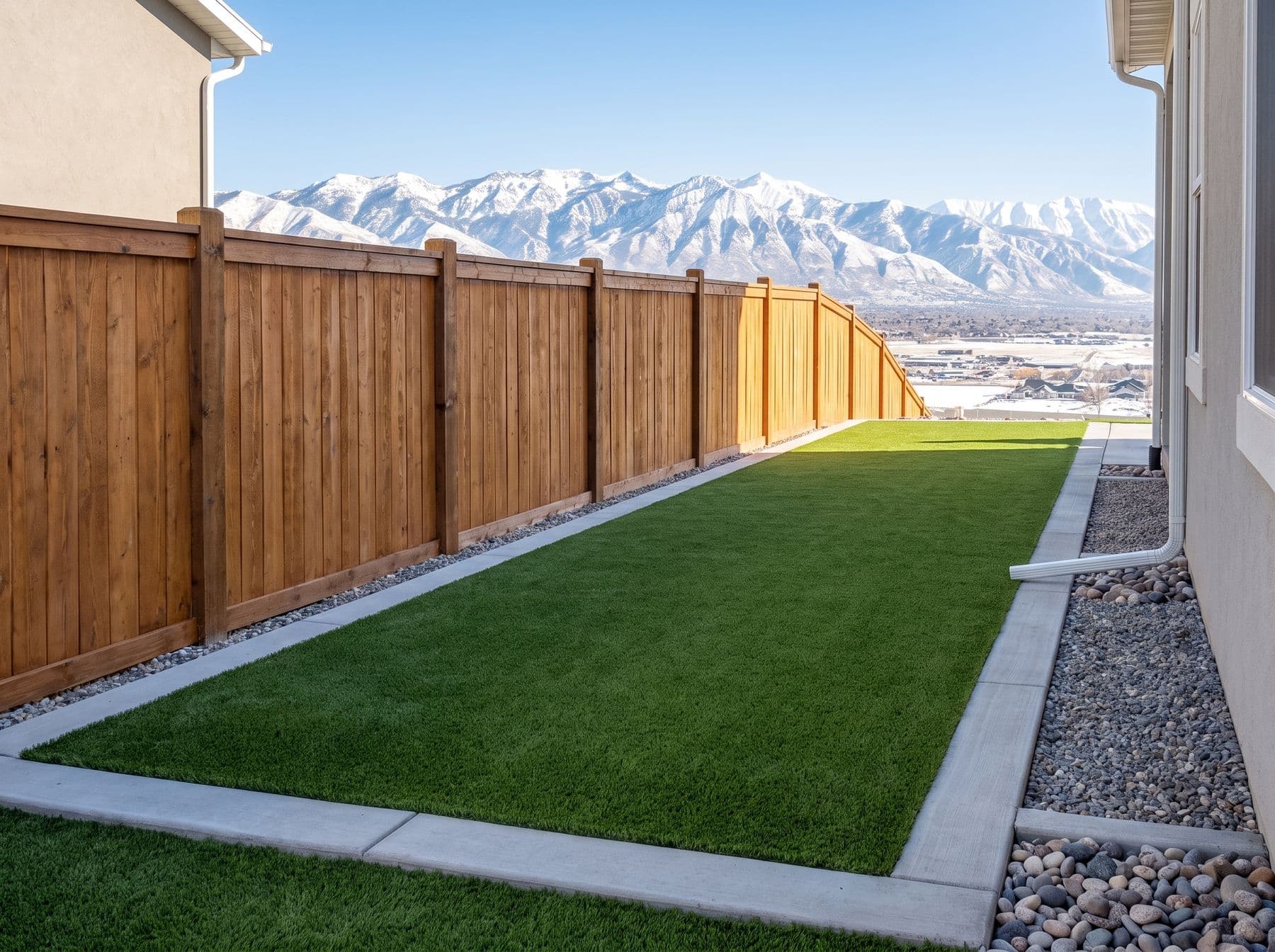
The perimeter is the failure point. We spike edges tighter on pet installs and use a hard edge restraint wherever the turf meets a bed or fence line.
Summer surface heat
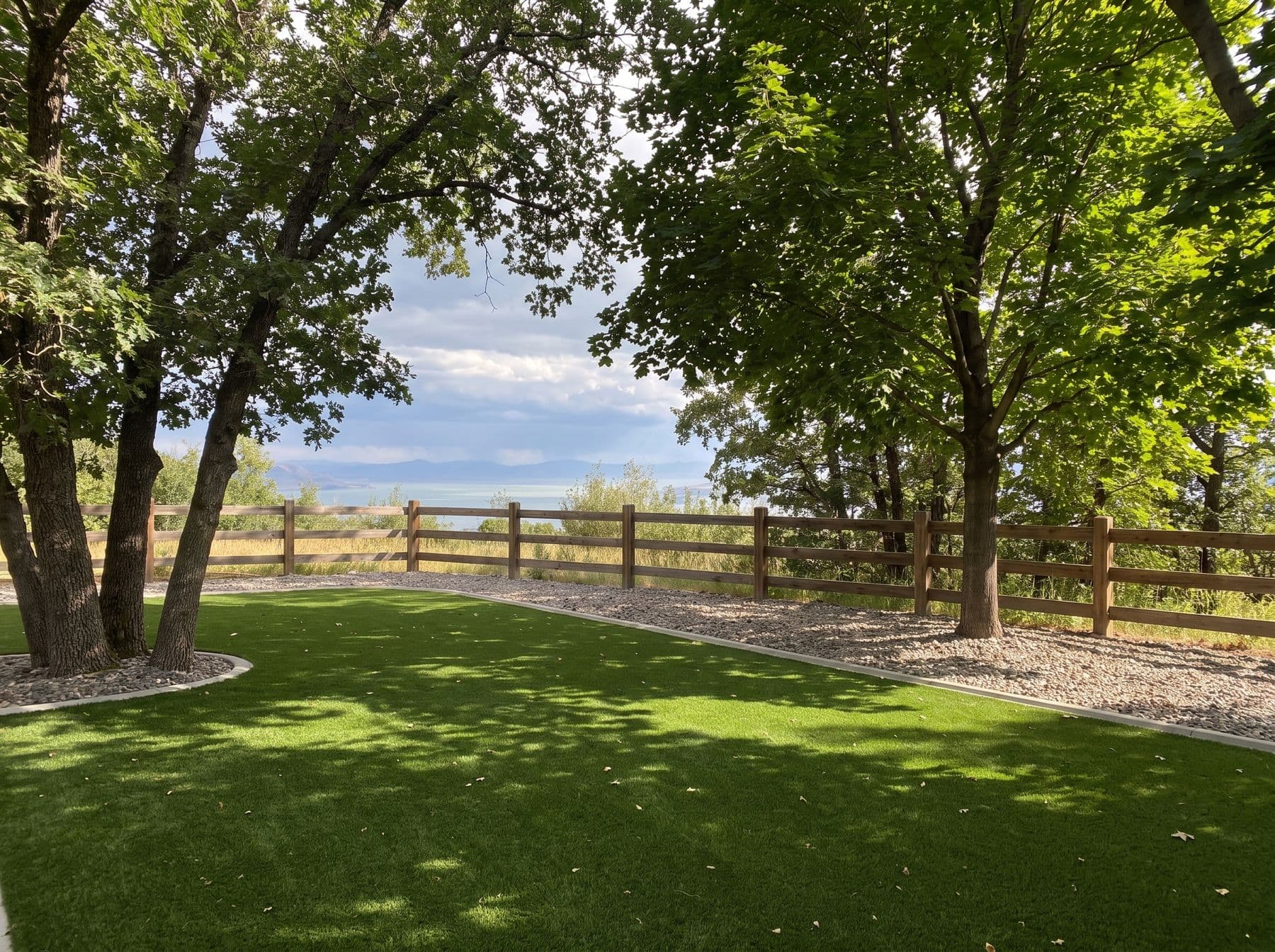
Turf gets hot in direct Utah sun and dogs feel it through their paws. Shade over some portion of the run, or a quick rinse before letting them out, makes a real difference on the hottest afternoons.
How the job runs*
- 01
Yard measurement
We look at where your dogs actually go, plus existing drainage and problem corners.
- 02
Quote
Written scope specifying base build, turf backing flow rate, infill type, and edge detail.
- 03
Install
Usually one to two days for a typical residential pet yard.
- 04
Maintenance walkthrough
How often to rinse, what to use, and what not to use.
Pet installs run slightly above standard landscape turf because of the upgraded infill and the deeper drainage base.See what drives the number.
Pet Turf questions
Will my yard smell?
Not if it drains and gets rinsed. The combination that causes odor is a tight base plus plain sand infill plus no rinsing. Change any one of those and the problem mostly goes away; change all three and it does not come up.
Can my dog tear it up?
Determined diggers go for edges and seams, not the middle of the field. That is why we spike perimeters tighter and use hard edge restraint on pet jobs.
How do I clean it?
Pick up solids as you would on a lawn. Rinse the area down regularly in warm months. An enzyme cleaner a few times a year handles the rest.
Is the infill safe for pets?
The zeolite and antimicrobial-coated infills we use are made for pet applications. We will tell you the exact product going into your yard and you can look it up yourself.
Where we install Pet Turf
Also consider
Get a free yard estimate*
Send your address and a couple of photos. We come measure, and you get a written number with base depth and materials spelled out.