Skip to content

Pet turf

Pet turf: what actually stops the smell

Odour is a drainage problem wearing a turf costume. Get three things right and it does not come up.

Published August 21, 2026
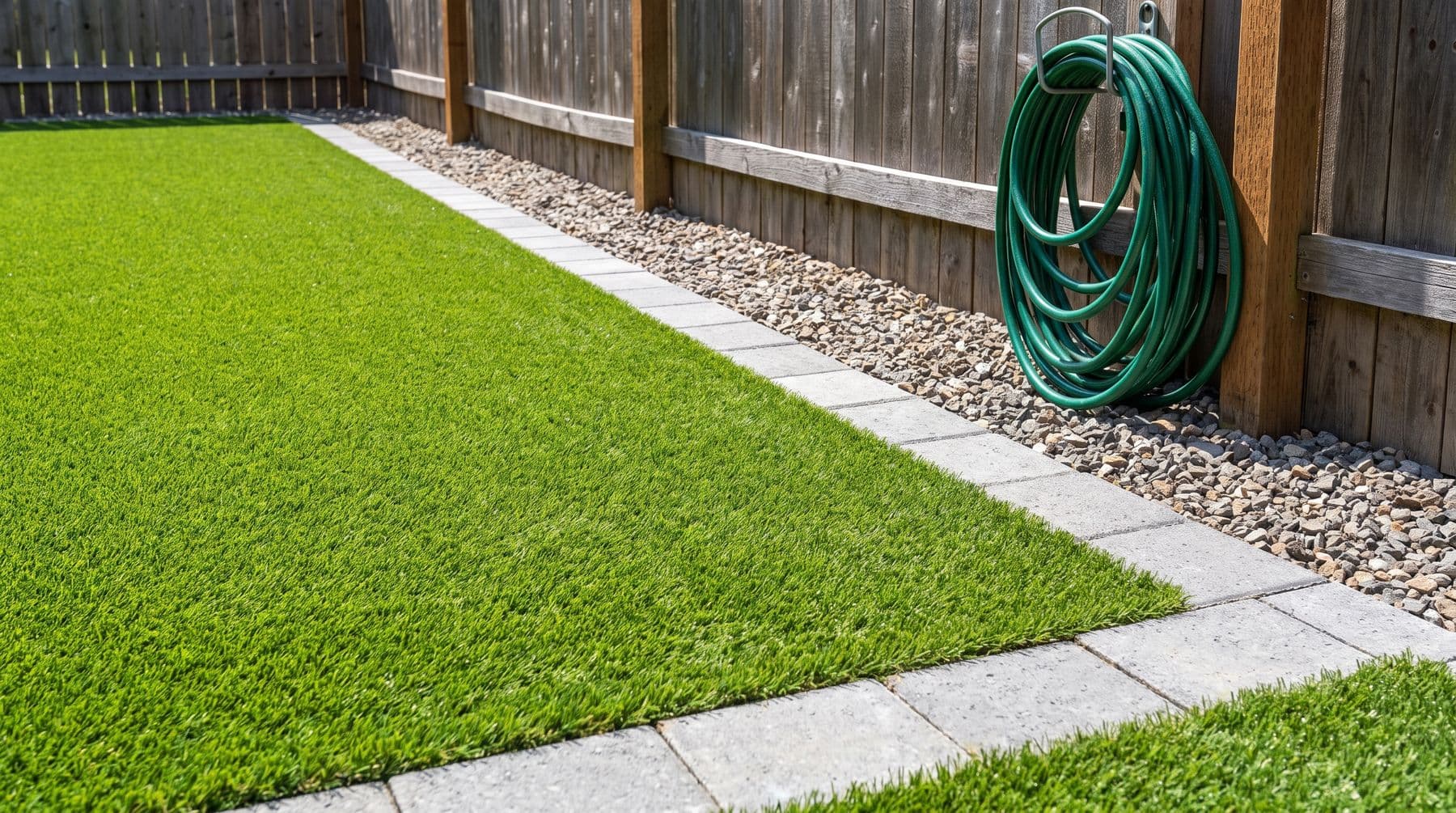
A clean artificial turf dog run with a paver border and gravel drainage strip

The short version

Pet turf smells when urine sits in a saturated base rather than draining through and being rinsed away. Three things prevent it: a deeper, more open base built for flow-through; a zeolite or antimicrobial infill instead of plain silica sand; and regular rinsing. Get all three right and odour is not an issue.

Why it smells, when it smells

Urine that drains through the system and gets rinsed away does not smell. Urine that sits in a tight, saturated base does, and the ammonia it produces binds to whatever is holding it.

That means the failure is almost always one of three things, and usually all three together: a base too tight to drain, plain silica sand infill that holds ammonia, and nobody rinsing it.

The base has to be built differently

A standard landscape base is built primarily to hold grade. A pet base has to do that and move liquid through quickly, which means going deeper and more open-graded than a lawn installation needs.

On heavy clay yards with multiple dogs, that alone is sometimes not enough. Where the ground genuinely holds water, the honest answer is a drain line and a discharge point, so there is somewhere for the liquid to go rather than a reservoir under the turf.

Infill is the single biggest lever

Plain silica sand is cheap and it holds ammonia. Zeolite-based and antimicrobial infills bind and neutralise it instead. The cost difference at installation is modest, and it is the largest single factor in whether the yard smells in August.

If you are comparing pet turf quotes, this is the line to check. It is easy to leave out and it is the one that determines the outcome you actually care about.

Maintenance, honestly

Pick up solids as you would on grass. Rinse the area regularly through the warm months — a hose is enough, and it takes a couple of minutes. An enzyme cleaner a few times a year handles the rest.

That is genuinely the whole routine, and it is less work than a lawn that dogs have destroyed. But it is not zero, and anyone promising a surface that needs nothing at all is setting you up to be disappointed.

Edges, because dogs find them

A determined digger starts at a perimeter, never in the middle of the field. Pet installations need the perimeter spiked more tightly than a lawn and a hard edge restraint wherever the turf meets a bed or a fence line. It is a small detail that decides whether the installation survives its first enthusiastic dog.

Common questions

Will my yard smell if I install pet turf?

Not if it drains and gets rinsed. The combination that causes odour is a tight base, plain sand infill and no rinsing. Change any one and the problem largely goes; change all three and it does not arise.

What infill should pet turf use?

Zeolite-based or antimicrobial infill rather than plain silica sand. It binds and neutralises ammonia instead of holding it, and the cost difference at installation is small relative to the outcome.

Can dogs damage artificial turf?

They go for edges and seams rather than the middle, which is why pet installations get tighter perimeter spiking and a hard edge restraint. Digging through the field of a properly installed turf is rare.

How much does pet turf cost?

About $14 to $22 per square foot installed in Utah, slightly above a standard landscape lawn because of the deeper drainage base and the upgraded infill.

Next step© 2026

Get a free yard estimate*

Send your address and a couple of photos. We come measure, and you get a written number with base depth and materials spelled out.

Get my free estimate