Skip to content

How we build

Why turf fails in Utah, and it is almost never the turf

Waves, low spots, lifted edges. Every one of them traces back to what went under the turf, not the turf itself.

Published August 21, 2026
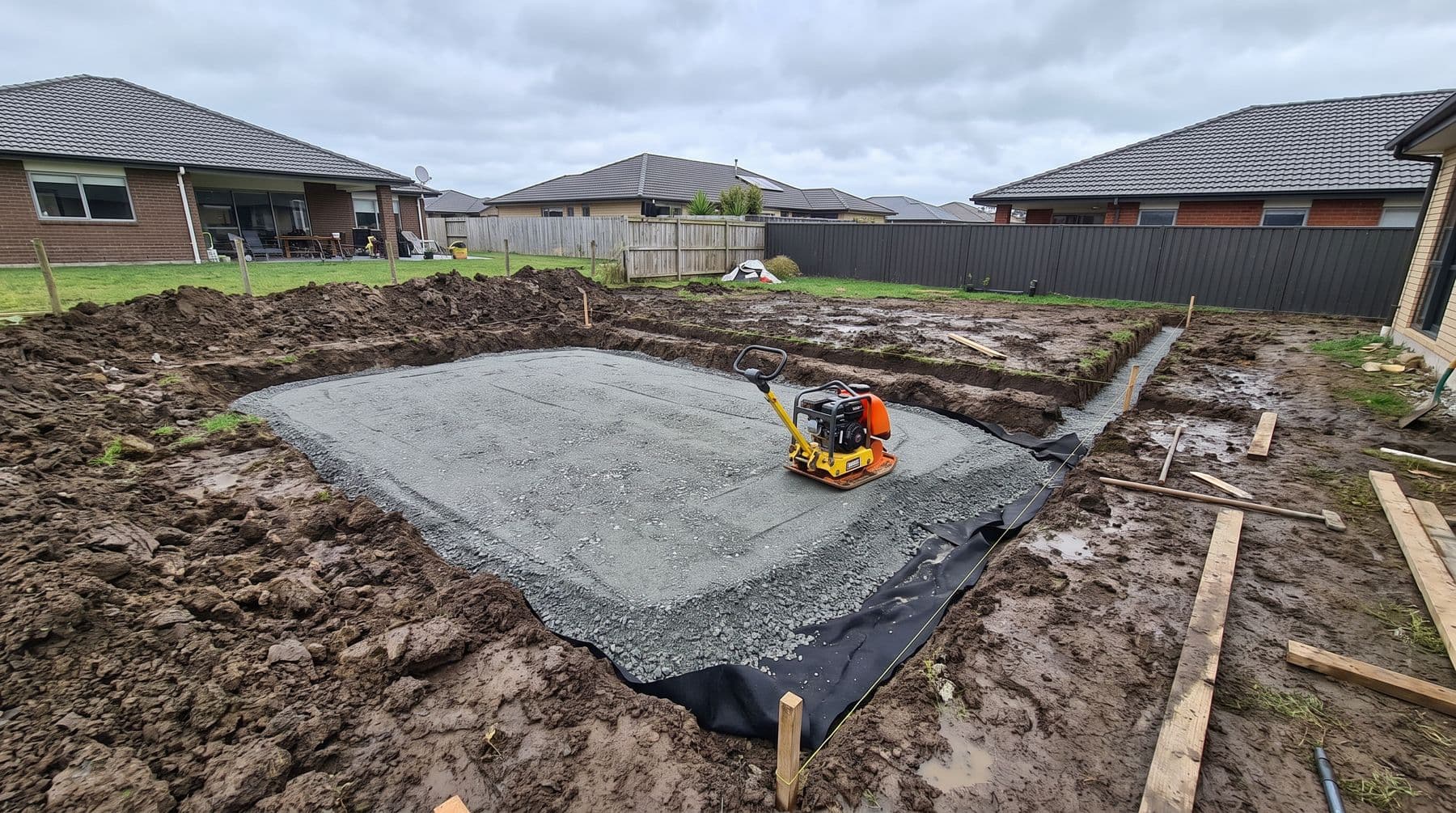
A compacted crushed-stone base graded flat mid-installation, plate compactor on the surface

The short version

Turf installations in Utah fail because of the base beneath them, not the material. Clay subgrade holds water, freeze-thaw cycles lift anything that traps it, and an under-compacted or fines-heavy base settles unevenly. The fixes are depth, geotextile over clay, a screened free-draining base compacted in lifts, and a hard edge restraint.

Everyone's turf looks good in week one

That is the problem. The parts of an installation that determine whether it survives are all buried before anyone sees the finished surface, which makes them the cheapest place for a competitor to economise and the most expensive place for you to discover a shortcut.

Three things do most of the damage in Utah specifically: clay, water, and the freeze-thaw cycle acting on the two together.

Clay does not drain, and base sinks into it

Much of Utah Valley sits on dense clay that sheds water slowly. Lay road base directly onto it and the base gradually migrates down into the clay, which is why a yard that was flat on handover develops low spots two or three seasons later.

A geotextile fabric between the subgrade and the base stops that migration. It costs very little and it is routinely skipped, because nothing about the finished yard reveals whether it is there.

Freeze-thaw lifts anything holding water

Water trapped in an under-compacted base expands when it freezes and pushes the surface up. Thaw, and it settles unevenly. Repeat that across a Utah winter and you get the wave pattern people describe as the turf stretching. The turf did not stretch.

Compaction in lifts — building the base in layers and compacting each one, rather than dumping the full depth and running a plate over the top — is what prevents it. It takes longer. It is invisible afterwards.

What the base is made of matters as much as how deep it is

Standard road base is full of fines and oversized rock. It packs hard and then holds water rather than letting it through, which produces the pooling, the soft spots that work into potholes, and the ground movement every freeze.

A crushed and refined granite base, screened so there is no large rock in it, behaves differently: dense enough to hold grade under compaction, open enough that water keeps moving straight down through it. It costs more per yard and it lasts a great deal longer. Combined with a perforated turf backing, snowmelt runs through the system instead of sitting in it.

Edges are where failure becomes visible

Turf lifting at a bed line or a fence is usually not an adhesive problem. It is a missing edge restraint. Every unsupported edge needs something hard to be secured against — bender board, a concrete edge, or the paving itself — and on pet installations the perimeter needs spiking more tightly, because a determined dog starts at an edge and never in the middle.

The three questions to ask any installer

You do not need to become an expert to protect yourself. Ask for excavation depth, base material and edge detail, in writing, on the quote.

An installer doing this properly will hand it over without hesitating, because it is the part of the job they are proud of. One who will not put it on paper is telling you something.

Common questions

Why has my artificial turf gone wavy?

Almost always an under-compacted base holding water, which lifts as it freezes and settles unevenly as it thaws. Occasionally it is a seam or an unsecured edge. It is rarely the turf material itself.

Can turf be laid over an existing lawn?

No. Organic material decomposes and settles unevenly, and you get a lumpy yard within a year. The sod has to come out.

How deep should the base be?

Typically three to four inches for a landscape lawn, deeper over heavy clay, and deeper again for pet areas that need flow-through. Depth alone is not the whole answer — material and compaction method matter just as much.

Next step© 2026

Get a free yard estimate*

Send your address and a couple of photos. We come measure, and you get a written number with base depth and materials spelled out.

Get my free estimate