Skip to content

Comparison

Turf, xeriscape, or keep the lawn?

Three genuinely different answers to the same yard. The right one depends on how you use the space, not on which is fashionable.

Published August 21, 2026
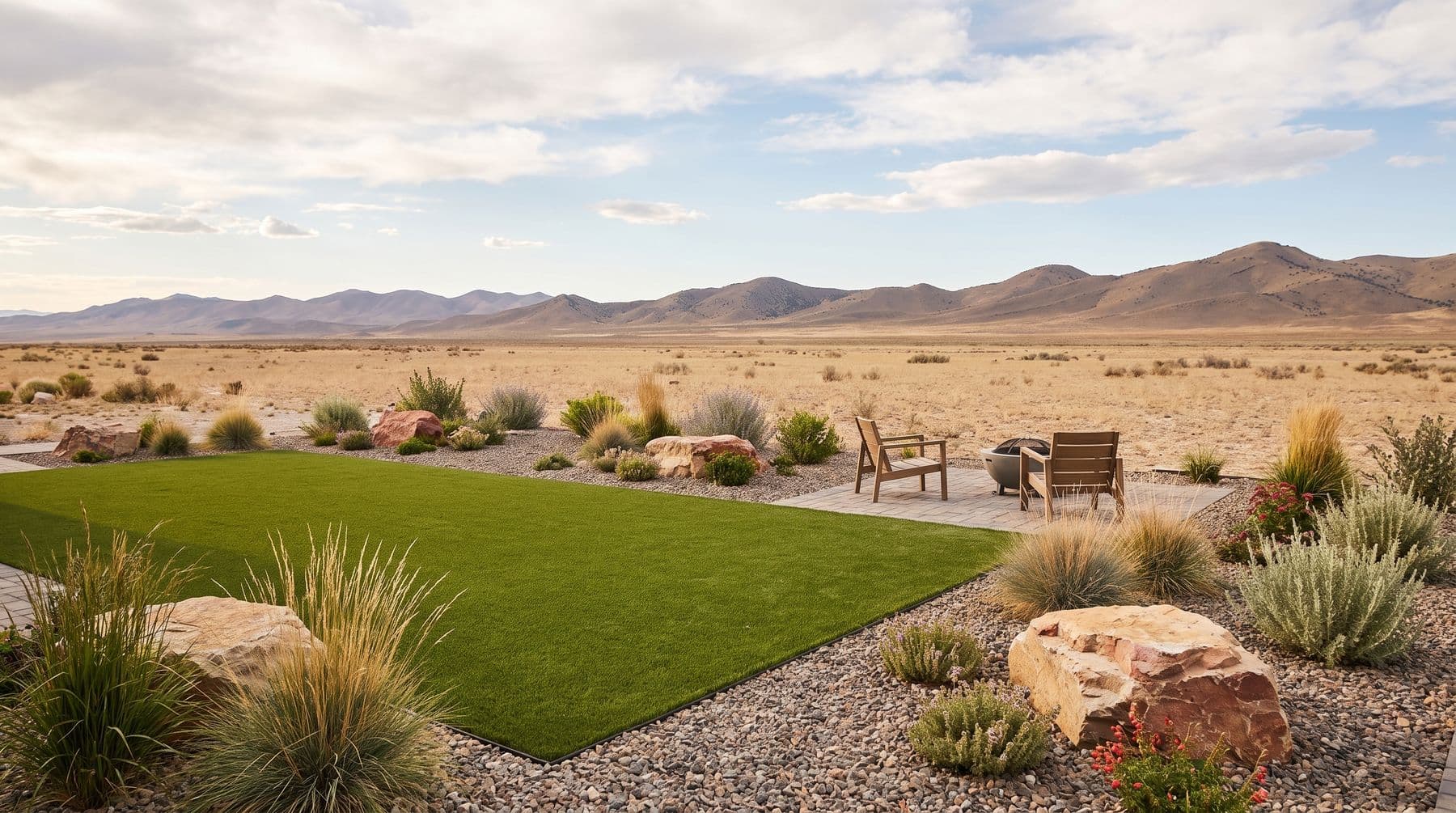
A turf lawn panel set within decorative gravel and drought planting

The short version

Keep the lawn if you enjoy maintaining it and it is healthy. Choose xeriscape for areas nobody walks on — it is the cheapest to install and to run. Choose artificial turf where the ground gets used: kids, dogs, entertaining, or deep shade where grass will never fill in. Most good Utah yards end up as a mix rather than one of the three.

Keeping the lawn

There is a real case for this and it gets dismissed too easily. If you have a healthy lawn, you do not mind the upkeep, and you are not fighting shade or dogs, grass is soft, cool underfoot, and costs nothing to install.

The running cost is the honest part. A 1,500 square foot lawn with a mowing service runs roughly $1,300 a year once mowing, five fertiliser and weed rounds, aeration and water are added up — around $13,000 over a decade. Doing it yourself trades most of that for about 20 hours a year behind a mower.

Xeriscape

Decorative rock, boulders, drought-tolerant planting and drip irrigation. It is the cheapest of the three to install and by far the cheapest to run, it suits Utah's climate honestly rather than fighting it, and on a large lot it is often the only sensible treatment for the areas you never set foot on.

The limitation is simple: you cannot use it. Nobody puts a paddling pool on decorative gravel or lets a toddler fall over on it. Xeriscape is excellent for the eighty per cent of a big yard that is scenery and wrong for the twenty per cent that is a room.

Artificial turf

Turf costs the most to install — $13 to $19 a square foot for a standard lawn — and almost nothing to run. It holds colour in August, in deep shade, and under dogs, which are the three conditions where natural grass reliably loses.

It is not free of downsides and you should hear them from us rather than discover them. It gets hot in direct summer sun, noticeably hotter than grass, which matters most for dog runs and children's play areas. It is a manufactured product with a service life, typically eight to fifteen years of warranty against UV degradation. And simple payback against a lawn runs into double-digit years, so anyone selling it purely as a money decision is overreaching.

What most good yards actually look like

Almost every backyard we finish is a mix. Turf where the ground is used — around the patio, the play area, the dog run. Hardscape where the furniture goes. Rock and drought planting for the rest.

On a large lot in particular, turfing wall to wall is rarely the right spend. Turf the part that earns it and treat the rest for what it is, and you get a better yard for less money than any single-material answer produces.

Common questions

Is xeriscaping cheaper than artificial turf?

Yes, both to install and to maintain. The trade is usability — xeriscape is scenery rather than space you use. Most yards are best served by both, in different zones.

Does artificial turf get too hot in Utah?

It gets hotter than grass in direct sun, and it is worth planning around. Shade over part of a dog run, lighter-coloured infill, or a quick rinse before use all help. We would rather say so up front than have you find out in July.

How long does artificial turf last?

Quality turf carries an eight to fifteen year manufacturer warranty against UV degradation and fading. A properly built base outlasts the turf, which makes a future re-turf far cheaper than the original installation.

Next step© 2026

Get a free yard estimate*

Send your address and a couple of photos. We come measure, and you get a written number with base depth and materials spelled out.

Get my free estimate